Category: Factual

  • In the Morgue with My Daughter

    In the Morgue with My Daughter

    “Say it out loud”. I spent quite a while, swimming in drink, tied to the house like a wheel on which I was slowly being broken. 

    Writing fiction means drawing on your life from time to time. I’d been writing a short story about a mortician. I took a break and I was back at that the now closed morgue and coroner’s court in Glebe in Sydney. It two weeks after the death at home of my nine-year old daughter, Zuzu. It was July, the winter sky outside was deep blue. I was looking at Zuzu’s little body, which was laid out behind glass like a museum exhibit.

    The top of the post-mortem Y-scar was visible starkly splitting her body from her stomach button to neck. Zu’ had been dead for two weeks. Her skin was waxy but her hair had grown a little and I wanted to brush it. I finally remembered the green, short-sleeved dress and the smart, shiny black shoes I’d bought to the morgue for Zuzu as part of the change of clothes for her cremation. She rarely wore smart, shiny shoes due to her cerebral palsy. The morgue assistant looked at the bag hanging from my right hand and offered to take it from me.

    “Can I brush her hair?” I asked the lady who was in charge of everything in the world at the moment.

    “Do you really want to? She won’t feel the same. It might hurt your memory.” 

I was taken by the phrase. I wanted to pick Zu’ up and brush her hair, which I’d cut in previous years into a bob. I wanted to hug her. But I understood what I was being told. 

    I had picked Zuzu up when I’d found her dead in her bed that morning a week previously. She wasn’t quite cold then. I’m not going to write more about that picture, at least not now, there is no point in recreating that image. Nothing useful can come from reinhabiting that place. I’ve still not created a stabilised, decent image to convey those details yet. I doubt I ever will. 

    Back in the morgue, the assistant asked again, “Are you sure?

    I was sure, I did want to tidy Zuzu’s hair just a bit. Just one final element of a relationship of father to daughter. Just one last touch. 

    “Yes, thank you, I am”, no faltering, there was such little energy left in me. 

    After a few moments Zuzu’s body was returned to the world outside the glass. I had her hairbrush in my hand, it weighed so much that I could hardly lift it to brush her fine, beautiful hair.

    I kissed her forehead, gently. She smelled of the morgue and post-mortem table, distance, anything but here, but of my desolation and fear. I was scared of my daughter’s corpse because although it obviously was her, large blue eyes, her resting face was peaceful as usual, her hands clenched as her cerebral palsy forced them to be even in her relaxed moments. 

    For a fleeting moment, as I lifted my face from her forehead and the kiss I’d left there as I did every night, for that moment I caught her smell, at least I hope so.

    I was crying from my gut, the lady passed me a small, sanitised paper towel to wipe my eyes and cheeks. I took a moment to look around the room. Surprisingly now I only have a faint, washy, hallucinogenic view of that room, probably wrong. 

    It was bright, high contrast, white light unlike the bright, chilly, damp winter light from outside. At least behind me it was. Looking at where Zuzu had been laid out, it was darker. 

    The assistant took the wipe from my hand and, to this day I remember what she said with great and beautiful clarity. She said to me, “Don’t worry, there’s somebody here at all times. She won’t be alone. And we never turn the lights out, so she won’t be in the dark.”

    At first, I had no idea why she was saying this but it made me feel slightly better. 

“I am so sorry”, I wanted her to touch my hand just for human contact, she didn’t of course. She continued, “I will take care of your Zuzu. I will make sure she’s ok.” She emphasised the word, “will”. I believed her. 

I left the morgue, and sat in my car. Zuzu’s wheelchair was still in the back and my next task was to work out what to do with it. But first, it was time to drive Zuzu’s memory to the Domain in Sydney, down to Mrs Macquarie’s chair where we used to sit and look out into the world. 

    That morgue assistant had a terrible, horrible job to do. I can’t imagine how she felt when she got home that night. A man, sobbing and shaking and trying to brush his little dead girl’s hair. A man staring into the distance in pieces, and this public servant dragged up from the depths of her experience, soul and good heart some beautiful, supporting and decent words. 

    I still remember them. They still help even when memories burst in of the morgue itself. 

    Thank you for your service.

    The other point of this post is to “Say it out loud”. I spent quite a while, swimming in drink, tied to the house like a wheel on which I was slowly being broken. Scared to go out because other people and their daughters would be there.

    I realised that dealing face on with the morgue and Zuzu’s hair, the Y-scar and the cold would never go away. So, I’d better deal with them if I wasn’t going to let my daughter die again and again and again in my heart and mind. 

    So, here we go. When it hurts, I write. 
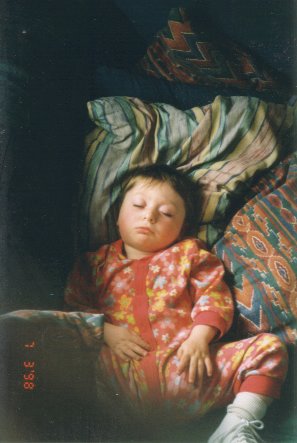
    My daughter sleeping peacefully on cushions at home.
    Baby Zuzu asleep peacefully at our home.

  • Darwin and the Aborigines

    What you have to understand is that Darwin, unlike the majority of Australia, has a very visible Indigenous Australian population. 

    I once had a conversation in a pub in Darwin, in the Northern Territory of Australia, during which I was threatened with a beating and told that the indigenous people were happier and better off before they had the vote and were paid in money.

    I was living in the town at the time, the pub or ‘Motel’ was my local. The man I was talking to, let’s call him “Jonesy, did odd jobs about the place and had previously worked out in the remote cattle stations. 

    That night, however, he was told that I was a journalist. 

    I hadn’t told him about what I did. Let’s also be clear that I was a journalist, and had been for decades, predominantly on consumer magazines. I wasn’t a news hack. Someone else told him. They’d known me from before I’d moved to the Territory.

    Jonesy had been telling me about the aborigines and their history after a tall, dark skinned man had come into the bar to place a bet. No one told him to leave. Many of the drinkers just stopped talking, cleared a path to the TAB (Totalisator Agency Board) window, and then cleared a path back. The bloke was well and truly othered out of the pub.

    “He’s laying a bet for a white bloke probably. Often comes in here. He’s one of the good ones. Keeps himself to himself, doesn’t get pissed up”, Jonesy told me, taking a swig from his fifth rum and coke.

    “What’s his name?” 

    “I don’t know mate. Thing is he’s happy. They don’t understand money, you see. It makes them confused and unhappy”.

    I’ve never understood money but I didn’t think this is what he meant. Jonesy was a man in his fifties. Short, stocky, he had a great deal of dark hair on his head, cowboy boots on his feet, and a well worn leather waistcoat over his Cold Chisel t-shirt. He wore stonewashed blue jeans held under his impressive beer belly but a wide, studded belt.

    “My dad used to employ lots of them, back then he paid them in tobacco, sugar and other food that was good for them, and they liked it. Gave them somewhere to stay during the Wet (season). Kept them off the grog. If they got on the grog, that was it, they were off it without any pay.”

    I was shocked about the pay until he added some history for me.

    “Then in the late 60s the fucking government told everybody that the black fella had to have equal pay. Worst thing that ever happened to them. Worst thing. They don’t get it. Money, they don’t get it. Not part of their culture. Makes them angry because they had nowhere to spend any of it and they had no idea how to save it. 

    I was interested in how, briefly, he switched to the present tense before switching back to what he obviously thought of as the good old days. 

    “Did nobody teach them about money? What about the banks?” I asked.

    “The government didn’t give a fuck, just wanted to be seen doing the ‘right thing’ by the rest of the world. Banks always side with the government. The rest of the world doesn’t understand the Black Fella. And we didn’t have the time, not with work to be done”, he paused.

    “And anyway, you can’t teach them that sort of thing. Nothing complicated. Manual stuff, sure. They can pick up tools and a do bit of driving but nothing too…” he looked for the right word, “No brainwork.” 

    What you have to understand is that Darwin, unlike the majority of Australia, has a very visible Indigenous Australian population.

    Jonesy wasn’t talking like the majority of white Australians whose only encounters with the First Nation people were via television. He saw the people every day and still had no understanding nor empathy. He exuded a paternal sympathy that masked disgust, misapprehension and fear. 

    “My shout now mate, same again?” he asked amicably.

    I nodded. I was on my fifth or sixth schooner of weak beer, the kind you drank when the humidity meant that the alcohol penetrated deep and exacerbated the Tropo madness. It was getting to the end of the Dry season and the humidity was awful.

    The skies continued to fill with heavy grey but refused to give anything away. This part of the season was known to send people mad. But Jonesy wasn’t mad. Jonesy was as sane and normal as they come.

    He headed off through the throng of Friday afternoon drinkers to the bar. While there he stood next to the bloke I knew from elsewhere and another time. 

    I stood by the pool table and watched two blokes bashing cracked balls on faded blue baize. As they played they argued over the rules. One insisted on New South Wales rules while the other insisted on London. It often struck me that Darwin was mostly populated by people who had left other places looking for anonymity and arguments.

    There’s a popular phrase used about the city: “Darwin is the place for the unwanted and the Wanted”. 

    Someone came in from the swampy air outside and announced that there was a storm coming in from the coast. Dark clouds, lightning, he’d seen it. This was cause for celebration, disbelief and booze. The meat raffle was imminent. 

    Jonesy came back from the bar and pushed my beer at me. 

    “You’re a sneaky bastard aren’t you, mate?” he spat out the words.

    “What do you mean, mate?”

    “A fucking journo”, he paused, “aren’t you?”, he paused again.

    “Well, sort of yes”, I admitted, my vanity aroused by nothing more arousing than the word.

    “If you ever write a word about what I said, I’ll find you and batter you. I swear to fucking Christ I will”, he wasn’t joking.

    Two options now. Smile, assure him that I wasn’t going to use my Woodward and Bernstein-like clout to publish a searing indictment of the racism that everybody knew was endemic to the town, orÖ

    “Why mate, don’t you agree with yourself? Don’t you think you’ve nailed it?”. 

    Jonesy had a thought, then another thought. 

    “That’s not the point and you fucking know it. This was a private chat, in the pub. And I will fucking find you.”

    “No, you won’t mate. Let’s not kid each other.”

    Jonesy waggled around like a penguin on the spot. He put his glass down and picked it up again. Other blokes gathered round for the entertainment. 

    “I’ll break your fingers now, mate”, he hissed.

    “My fingers?”

    “Stop you writing won’t it?” he was pleased with that.

    The bloke I knew from another time stepped in. “Jonesy, mate, calm down”, he said, smiling.

    This was not a sentiment universally held by the crowd, none of whom had heard the conversation that had led up to this. Everybody knew everybody else in the pub, and everybody knew that Jonesy was a show pony. But the Dry was about to break with the storm now audible as it approached from the coast. The lightning was flashing through the long, dirty windows.

    But I knew that Jonesy wasn’t going to break my fingers. We both knew it. Jonesy was a small, angry balloon of hot air, a walking humidity, a blowhard who was nearly out of wind. 

    “I’ll dictate it”, I said, having not even thought about writing up his tired, old rant. Not even in the videogames magazines I still had contacts with. Nor in the local newspaper, The NT News, because they wouldn’t print it because it wasn’t of interest.

    “You’re a smart-fucking-arsed cunt aren’t you, Tim? You’re a proper Pommy cunt”, he waggled some more.

    All the other Pommy cunts who had wound up in this pub in Darwin and wouldn’t or couldn’t go home to Blighty shuffled a little and turned back to their conversations. 

    The Black Fella who had come in previously returned, collected his winnings, chatted with the barman and left. 

    “You know what, Jonesy. I probably am. But what I’m not is some lowlife, mouth and no trousers twat who can’t get over what his dad told him when he was a boy. Take  a look at yourself mate”.

    Jonesy swung for me and as he did I regretted all the times I’d not said this sort of thing back in England where I’d put up with similar sentiments in similar surroundings for years. He missed me and fell against one of the tall tables that punctuated the bar like exclamation marks. 

    It must have been that I was in another country, or the beers or the storm coming in and clearing the stagnant humidity that had smothered and rotted everything for months. It must have been something out of the ordinary that enabled me to bring the violence on. Whatever it was, I was glad of it. 

    I was also glad he’d missed because I’m rather a coward when it comes to bar fights, or any fights. 

    “That’s enough Jonesy mate. That’s enough. Come over here for a beer, mate”, someone said. Jonesy stood up and staunched a smattering of blood that had emerged from his fight with the table.

    “Just you be careful, I’m watching you, cunt”, he said to me, the fight taken out of him by the furniture. 

    And then the rain hit, and it hit hard, and everybody cheered. And the only thing that had really changed was me. 

  • A Childless Father’s Day

    A Childless Father’s Day

    It took me a while to face the fact that I couldn’t stop being a father after my child passed away. Mark Zuckerberg’s mad plan to pay-per-zombie our loved ones wouldn’t have helped.

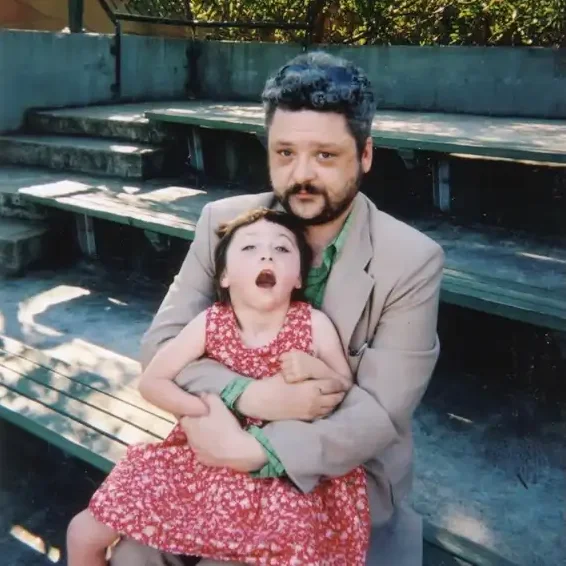
    Tim and his daughter at Taronga Zoo in Sydney.

    I realise now that you can’t stop being a father once you’ve been one. Well, I can’t stop being a father. Despite the fact that my daughter died in 2004. Father’s Day was a bastard of an experience.

    It took me a while to face that fact. It was a process, and Mark Zuckerberg’s mad plan to pay-per-view our Ai-zombified dead loved ones wouldn’t have made it any more or less wonderful or terrible.

    As far as I can imagine, it will desiccate our memories, it will cast them in mass produced, digital amber. It will distort them with prettification. It won’t be a process of change it will be a one-off transaction.

    (And Meta will advertise product to you during the breaks in what passes for conversation)

    Zuzu had a severe form of cerebral palsy. She could sit up unaided. She could only eat via a tube. She was unable to talk. My goodness she could smile though. And she had that smell. And she had that touch… and she dribbled uncontrollably. I remember all of that. I remember how we, her mother and I, searched for ways to make her life better. We never searched for ways to love her though. I don’t need to remember that love, it’s still with me.

    For a very long time on Father’s Days I would sit looking at a bottle of whiskey, then diving deeply into it while I listened to Sun Ra or Harry Partch or maybe Morton Feldman – anything to break up and into my incessant grieving. To distract me from the loss.

    Time passes. It wounds all heels as the old reversal says. It doesn’t stop just for me or you, and thank goodness for that because human beings are meant to move through it. We’re built for it. We age and we grow, then we shrink, then we die. It’s all part of the process. It enables novelty, uniqueness, emotions.

    Time and memory move along irrespective of what we want, either numbing your pain or illuminating your joys. If you’re lucky something from both.

    Smell, touch, recall

    Once to calm both of us down on yet another night of total bedclothes changing after yet another reflux and vomit session, I ranted at the moon about how unfair it all was. I remember that. Zuzu couldn’t understand my sleepless frustration so she cried. I picked her up from the cushions on the floor and she laughed and then I laughed. We laughed out loud together at 3am.

    Nowadays I drink green tea and listen to Kohachiro Miyata playing his flute, other pieces by Sun Ra, maybe a snatch of Moondog. I definitely Glockenpop by Spiderbait. She seemed to love that tune, or maybe it was me bouncing up and down. I remember those days with great joy. In our home in Sydney, the windows open for the breeze. In the home she died in.

    Zuzu was never too keen on Harry Partch. I have her face in my mind, my symbolic heart (maybe in my soul if I have one) right now. I have her smell – not the smell of her vomit or her tube-feed – but the smell of her just out of the bath, lying on my chest drying off.

    If I imagine never having had Zuzu in my life, I wouldn’t be able to miss her so much. The fact that I do miss her so much, the fact that I am still her father, the fact that she was with me in life makes missing her worthwhile. It makes missing her a valid emotion.

    My fading, changing memories are human, they reaffirm that experiencing life through her eyes, with her, was a good, human way to live. The memories that refuse to leave, the good and the bad ones are all part of the non-transactional process of life.

    So, I suppose that Father’s Day is a day for fathers to remember their children, no matter where they are.


  • Learning Irish – Part 3 – Fear & Bean

    I’ve been to Irish weddings before in Dublin, Borris and Athlone. Back then I had no Irish to speak of, let alone to speak with.

    Here’s a fun fact. In Irish the word ‘Fear’ means ‘Men’. ‘Bean’ means ‘Woman’. Now there’s a valuable lesson in not falling for false cognates. These are words in different languages that mean different things despite being spelled the same.

    Why do I point this out? Quite simply because the proximity between England and Ireland became conflated in my mind with a proximity in language structures and grammar. This, in hindsight, was a heavily retarding thought process akin to thinking Spanish and Portuguese share language structures. They don’t. Much.

    That proximity combined with the nearly 1,000 years of British colonisation means that there are loan words between the two languages. There’s no need to go into those because, well, they’re shared so you’ll recognise them.

    This Anglophile thinking extended and extends further than nouns though. Sentence structures are also wildly different between the two languages. You need to be prepared for this. I wasn’t. This is important because I will need to piece a few sentences together for The Wedding later this year in Dublin. More of that later.

    History theatre 2025

    What I won’t do here is a history of the Irish language. Many, many people have done and are continuing to do better work on this than I’m capable of. I’d suggest having a look at books including the priced A History of the Irish Language From the Norman Invasion to Independence by Aidan Doyle.

    Also worth a read for grounding yourself in how Gaeilge has become what it’s become. The Údarás na Gaeltachta site also has a decent backgrounder.

    As for video, there’s loads of resources out there including this fascinating talk:

    The wedding fear

    I’ve been to Irish weddings before in Dublin, Borris and Athlone. Back then I had no Irish to speak of, let alone to speak with. I sang along with Behan’s The Auld Triangle and Come Out Ye Black and Tans in the same way as I sang along with hymns and the English national anthem’s second verse; brokenly and half a second after the others sang them out.

    This next wedding will be different. I know at least two people who regularly converse in Gaeilge are going to be there. I know they’ll mock my ‘citizenship’ and passport. I guess they’ll do so in Irish.

    I want to be able to say more than “Dia duit, conas atá tú?” (“Hello, how are you?”) before looking more ignorant than a Reform Party member. I want to show willing in the same way as I do on buses in Paris or in German bars. I know they speak English, but I’m in their country. In Ireland, I’ll be in my country, sort of.

    What I don’t want to do is keep a note of useful phrases (the Duolingo theory) that I’ll learn by rote. This is because I’ll have no map for them to actually take up residence in the correct bits of my brain; to the inspired parts of my imagination, to be weaved in among my vocal chords.

    Object of desire

    I want to be able to construct sentences on the fly. This means understanding that English uses Subject-Verb-Object (SVO). Whereas Irish uses Verb-Subject-Object (VSO). To this extent Gaeilge (Irish) has more in common with Breton, Welsh, Biblical Hebrew and Tagalog.

    Think of this as follows, in English, “The women drank beer”. In Irish the structure would be, “Drank the women beer”.
    That’s just grammatical word order. That’s before I look at genders, possessive’s, and even word choices. For example, imagine how the sentence, “I’ve had an ok year, Brendan. I may be unemployed and old but I’ve still got my dignity and this beer. How’s yourself and Grace?” might be rendered in one of the three Irish dialects.

    The challenge is immense and that’s what’s so beautiful about encountering other languages.


    Next time: I’ll answer a few questions if you have any. I will definitely waffle about the latest Irish Revival and how it can make learning Gaeilge that much more fun.


  • Learning Irish – Part 2 – Why bother?

    “Don’t worry about this when you get started. Most Irish speakers won’t snap your head off for stumbling over a few intricacies as a learner”.

    “No one speaks Irish anyway, what’s the point in learning it”. I also look at my encounters gender and I encounter the seemingly terrifying síneadh fada.

    Many of the reactions to me saying that I’m trying to learn Irish have been on the spectrum of “Why bother?”. Not surprisingly this tends to come from the English position of monolingualism. However, I’ve also heard it from Irishmen and women along the way. The ‘fact’ that many of these people hang on to for dear, negative life is:

    “Almost no one actually speaks Irish in Ireland”

    Leaving aside that the weight of numbers should never be a bar to anybody learning anything, this argument is not even true. 

    The latest stats from the 2022 Irish census as reported by The Central Statistics Office (An Phríomh-Oifig Staidrimh) reveal that, “Almost 1.9 million people (aged three years and over) stated they could speak Irish, an increase of more than 112,500 people since Census 2016 (+6%).” 

    1.9million people seems to be a reasonable number to have a chat with over the garden fence with. As if this wasn’t enough there are also Irish language speakers worldwide. There are books, there are podcasts, entire TV channels, there are even get togethers.

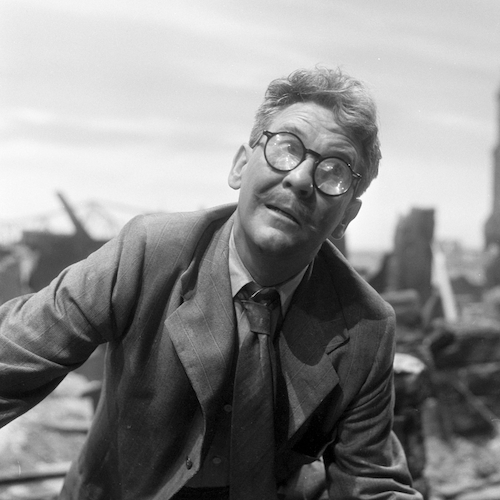
    Burgess Meredith from the Twilight Zone episode Time Enough at Last. He is alone at last now everybody else in the world is gone. He can learn and read as much as he likes. Until he breaks his glasses that is.

    Burgess Meredith from the Twilight Zone episode Time Enough at Last. He is alone at last now everybody else in the world is gone. He can learn and read as much as he likes. Until he breaks his glasses that is.

    Numbers aside, the statements and questions, and their cohorts, including, “There’s no point, it’s a dead language”, “It’s regressive, go forward not back” all avoid human elements such as curiosity and in my case respect for my newly gained citizenship, passport, history and culture.

    In short, I’m learning the language because I want to learn the language. All the retarding niggles can be set aside like Séamus Ó Duilearga, (James Hamilton Delargy) might set aside a poorly derived folk hero’s tale.

    Now, as promised, gender

    The English language doesn’t bother with gender when it comes to nouns, verbs, grammar. This leads to generations of people, well me for sure, being confounded as teenagers in French and German classes. 

    Irish, on the other hand, enjoys getting down and dirty when it comes to gender. The Geeky Gaeilgeoir site has a decent summation. Take nouns for example. 

    “Masculine nouns with a consonant, the consonant is unaffected by the article:

    Masculine nouns beginning with a vowel, “t-” is prefixed to the beginning of the word.

    Feminine nouns beginning with a lenitable consonant other than “s,” it is lenited.

    Feminine nouns beginning with a vowel, the vowel is unaffected by the article.

    Feminine nouns beginning with an “s,” “t” (without a hyphen) are prefixed to the beginning of the word.

    I received some excellent advice after I left aghast by these gendering confabulations. “Don’t worry about this when you get started. Most Irish speakers won’t snap your head off for stumbling over a few intricacies as a learner”. 

    Generally, I’ve found this to be a widespread opinion and a welcome one. This laid back attitude, however, doesn’t extend to the ‘Fada’.

    Fada of the nation

    Gaeilge has a diacritic (think é as in ‘cliché’) that makes the words that take it seem crazed to my English-language drenched mind and sense of ‘how language should work’ training. 

    You have to forget whatever language is your native one when contending with Gaeilge. This, I’ve found, can be a little stressful – after all that’s how your inner voice communicates with you. I’ve also found it to be immensely enjoyable. Just immersing myself in a language construction that is so different has opened my ways of seeing the world to wonderfully new perspectives.

    The fada, or in this case the Síneadh fada, has a variation of examples that you’ll see used a lot. Try this one.

    “Cáca makes a nice dessert, but you don’t want ‘caca’ icing!”

    Cáca, you see, means ‘chocolate’. Whereas ‘caca’ means the end result of digesting chocolate or anything else really.

    I’m not going to go into the intricacies of the fada here. There are language experts out there who are far more qualified than I am at my foetal stage of Gaeilge development. When it comes to the way you pronounce words blessed with a fada, rather than listen to me massacring the language, I’d highly recommend visiting the Teanglann site as a good starting place for you and your tongue.

    Next time: We’ll look at my fear of speaking Irish, and how I’m preparing to do so at a wedding in Ireland.