Tag: Family

  • The Assumption – Chapter 1 Leaving


    Dr Neil O’Neil’s voice was in my head. Stuck there like a fog stuck fast to a lighthouse. “It’s a shame to miss a day like this with the sunshine burning you dry when you could be drinking with your pals in good bar, so”, he’d tease through the screaming clamours of the prison landings.

    His basso combined with his thin as shoeshine pretence of an Irish brogue irritated me. He always had it at the ready. He had several brogues that he muddled up and deployed sometimes in the same sentence.

    “Everyone loves the Irish”, he said, referring to everyone in the United States, because not even the Irish love the Irish all the time. I learnt in prison and similarly from my family that it was considered that you had ‘notions above yourself’ to talk about that sort of thing. “Don’t go playing the martyr, you”, was the purest and most unanswerable admonition.

    “Will you not just come for a small one, I have the thirst on me?” he would say.

    “Would you have a few dollars to spare, I’m temporarily without funds for now, so”.

    “Jesus, Mary and Joseph but I’ve the poor mouth on me!”

    “You’re a good man yourself, so you are”, he’d say.

    He adopted the theatrical Irishman when he needed a little extra charm. Born in New York, he’d never visited what he liked to call The Emerald Isle, The Auld Country, Eire. Any Irishness in him had been diluted by the Atlantic during his ancestors’ boat journey and escape from either starvation or incarceration. The American Dream. Dr Neil’s well-rehearsed accent was enough to fool most people outside Ireland. Actual Irish people weren’t so gullible. Or they were confused by a single O’Neil sentence that travelled up from Cork via Kilkenny before veering off to Ennis, then back across to South Dublin, finishing in Derry.

    As I say, Dr Neil O’Neil came from New York; born, bred, educated, deflowered and lost his mind there. We’d met in Manhattan where and when I was modelling for the Austin-Rodney-Reed Agency. Mostly doing magazine fashion shoots, cocaine and anybody who fancied a go on me. Neil and I had been inseparable for a few years after recognising each other’s opaque charms. We weren’t other people. Like teenagers we were certain of this. Teenagers with stacks of disposable cash and limited imaginations as to how to spend it.

    I had snogged him in Shalford by St Eades church when we returned to the UK for my parents’ funeral. We’d been on a bench surrounded by gravestones. Had we not been swallowing each other, we could have looked across the river Icene, clement to the many people who had lost themselves in it over the centuries, the millennia. 

    Shortly after that snog, he had disappeared and I realised what a toadman he was. When Aunt Bernadette had met him, she had huffed at the sight of him. He’d tried his charm on her to absolutely no avail. At the Afters with the quiches, the white bread sandwiches, warm beer and cold red wine; after the bodies had gone into the soil under a hazel bush, I heard her telling him what he was.

    “You’re an utterable conman of the worst kind. You’re an unnatural being. Suffice to say that Laurie deserves you. You deserve each other. Now fuck off”, she rarely swore back then.

    So, as I walked across the massive concourse to look up at the departures board, his voice and the memories it dragged along were with me. 

    That “so” just dribbled off the end of his sentences for the sake of his authentic Oirish masquerade, so. The thing is: I was never bored around Dr O’Neil. You’d never hear him moan. He could be laying in the middle of the road outside the Black Cut Lounge & Bar in Flushing, New York with blood running down his cheeks and he’d still be trying to order a cab to the next place. He just never complained. He left that to everybody else.

    “Life’s too short, so it is”, he told me once in a pub called the Beehive one late evening after a very bad day at the races – we’d got into a fight and had ran away. We’d chosen the other side of Porthampton in the drabbest of all suburbs to get drunk in. Actually, we’d followed someone sexy who had disappeared, but there we were and it was there that he uttered that drabbest of cliches.

    Oh, Julianna my love

    Enough history, what about me? My name is Laurie Gonne and I like to float above it all like an angel, a toy balloon, a thrush with a snail in its beak. I was beautiful once, physically. Now I am statuesque, striking, even handsome. When this part of my story began I was a convicted criminal. Convicted, you could argue, for a crime I didn’t really commit. When some professional people did in fact argue this, it resulted in a lengthy prison sentence.

    I liked to read, watch and listen to the same things most other people do. This means that people relate to me even if I can’t or won’t  relate to them. I can talk with normal people for ages and I still seem to be interested. Reading, watching and listening to obscure stuff gets you nowhere. I know, I tried it when I was a model in Paris. It means nothing. Take Elsa von Freytag-Loringhoven for example, she read a lot of stuff and still died obscure, young and broke. Where’s the incentive? 

    I make sure to keep up with popular sports – soccer mainly. If you can speak a little soccer, you can get by in most parts of the world. It’s the only true lingua franca, vastly outweighing food.

    Anyway, there I was in my cell. My cellmate, as thin and scratchy as someone who has been malnourished since birth, was below me. In their own bunk. My eyes were closed but I was not asleep. The landings were quieter and less violent than usual. The occasional dramatic scream or pan crash, nothing more. 

    I was reminiscing to myself about one of the great loves of my life, probably the greatest; the remarkably beautiful Julianna Górecki. Tall as a cedar. Elegant as a hazel branch. French as a guillotine. She lived in a massive, crumbling Georgian country house in the village I grew up in. It was a house I knew well. It should have been my house. Our house. Me and Julianna. Julianna and I. Instead it was infested by my aunt Bernadette Theresa Glaister. A hypocritical shill for the Holy Roman Church (and also with you) and the three faces of God. A constant charlatan, bully and drunkard. My aunt. My remaining blood relative.

    Bernadette was the sister of my mother who died alongside my father two days after I was born. Some people said they’d been drinking and drugging heavily to celebrate. Other people said they’d been flying away from the sight of me. Bernadette had been presented with my pink, screaming, over animated, starving hungry self. She had given me away for my own good and for hers. I don’t blame her for doing that. I would have done the same thing. Not all of us have that parental twitch.

    We met afterwards. Bernadette’s Catholic Christianity forced her into that, so she demanded it. Back then the authorities just weren’t that bothered. Especially not in the face of a wannabe nun in full, red-haired, righteous fury, driven by Jesus, Mary, Joseph, and guilt.

    Bernadette and I did not like each other. We hadn’t since the first time I’d been introduced to her by my ineffectually loving parents. I was four weeks old. My mother left me with her for ten minutes while she went out to get my father to hurry up and come in. Bernadette shouted at me for getting between her and her ashtray. I remember that shout to every analyst and in every dream I’ve ever had.

    “You little shit! Where are you fucking parents, you tiny, useless little cunt! For fuck’s sake”

    My mother heard the shouting and rushed back in. 

    “Take it away. Take it away or I’ll probably damage it by accident”, I distinctly remember Her saying.

    Julianna had lived with her for a long time. Her and the house. She managed to bring a hint of humanity to the house, which looked down on Shalford village where I grew up.

    Wonderful Julianna, cool and warm, torridly tactile and terrifically remote. I adored Julianna like only a few other men and women I’d encountered. She made me a teen all over and inside. She made me self-conscious in a wonderful way. That’s love isn’t it? A kind of love. I have still never met anybody as satisfyingly distant as Julianna, and I’ve worked extensively in the high-end fashion industry. Julianna then. Julianna now. Julianna forever. 

    Talking of abandoning children, Bernadette loved the Roman Catholic Church. She still referred to it as that. Despite this, she was also puritanical if you excluded the drinking and smoking and the lesbianism, all of which of course she denied. This habit of fearsome and absolute denialism was a gift from her terror of a father, my bloody grandfather. That old ghost of a bastard had also passed down to her that grand old mad old big old house. As soon as I got out, I decided that somehow I was going to dislodge her from my and Julianna’s house.  I didn’t care where or how she went. I didn’t care if was in a taxi or a box. That was my original plan.

    A favour

    A week before I was due for release, I was chatting away with with my cellmate, a slight and crispy hooligan called Joe. He like to be called The Phoenix but no one ever called him that. Mostly he was called ‘Rat’ or ‘Weasel’. He called himself a safe-cracker but lacked the self-confidence and dexterity to be anything other than a sneak thief at best. He was a slight man. He’d talked to me about his wife and daughters who never came to visit him. He wanted to know why I had no family visitors. 

    I told him that the last remaining family member I knew of was my terrible Aunt Bernadette – I went into some detail because, what the fuck, I was in prison. I told him that the mad old bag lived in a mad big old house being looked after by sweet Julianna. 

    “It’s a massive Georgian house all elegant angles outside and a messes within. It overlooks a vast green space with two cricket pitches and a place to play soccer. It has a putting green. It was bestowed on the villagers of Shalford by a retired rear-Admiral had bought it so he could fish from the back garden into the private trout and pike stream. He had died in the house along with his secrets. By rights it should be my house. Mine and Julianna’s”, that’s the way I talked to Jo the Phoenix.

    “You should definitely go and see her”, said Jo sniffing the foetid air for a chance. 

    I sighed a bit too dramatically. I’d been planning just that for years, all through my appeals, during every phone call I’d had with Julianna, always.

    “Nah”, I dismissed him out of hand. 

    “Why not?”

    “You should never revisit your past”, whatever, blah, blah.

    “Never mind that. Look at you. You’re gorgeous”.

    I did. I was. I still am. 

    “What’s that got to do with it?”, I pretended to be cross. Not angry, just cross.

    “Your aunt over in Crosschester, right?”, Jo wouldn’t give up.

    We both knew Crosschester. Although it was two different cities when we talked about it.

    “Just outside. Shalford, the village, on the way out to the coast”.

    “I know it. Nice place. Nice people. Doors always open. Trusting people. Very trusting people”.

    They were trusting people all of them apart from my Aunt Bernadette who had stopped trusting anything since the Latin Mass was vandalised into intelligibly native tongues.

    “I suppose”, I had different memories of the place.

    Thankfully, Jo interrupted my train of thought with some pointless advice.

    “You should visit them, make a go of it, you only live once. Use your charm. You’ve always got a shot. Is your auntie in good health? Maybe not. Maybe she’s close to the end. She’s got to have left to house to someone, right? Maybe she’s made no will. That’d mean you’d be up for the lot. Maybe she has made a will and left everything to a cats’ home. That’s mean you’d need to put a stop to it?”, they paused, thinking.

    “Maybe she’s left it all to Julianna. That definitely means you’ll need to get in with her for sure unless you want to lose everything”.

    “That’s all so completely heartless, you’re really cold”, I snapped. Of course they was completely correct.

    I swear to god I heard the Phoenix shrug. 

    “Sure thing. But you should go anyway”.

    I rolled over on my bunk and faced the wall, feeling my own warm breath on my face and pretending it was one of my lovers. I was intrigued by Jo’s insistence though. No one in ‘the joint’ as some of them insisted on calling it, no one kept at you unless there was something in it for them.

    The Phoenix mocked the silence.

    “Make it up with Bernadette. You’re blood after all?”

    I reserved comment.

    “Go on, you never know. Love and all that, family and that, it’s got to be worth a shot, and when all’s said and done, you’re worth it”.

    “What do you want, Jo?”, I sat up, swung my long, bare elegant legs around so my feet were planted on the cold floor.

    There was a lengthy pause. 

    “Can you take a letter to Crosschester please? I mean, you’re going anyway? It’s in your way. I mean in your direction”.

    My first thought was, The Phoenix can read and write?

    “What’s in it?”

    Of course I meant, ‘what’s in it for me?’ and Jo knew that. That was one of the great things about prison in those days: the honesty. Every interaction was a transaction.

    “I’m not telling you what’s in it. I’ll tell you where it’s going though”.

    “Useful information”, I said,

    “It’s going to The Four Crosses Hotel, you know it?”

    I didn’t. So I said I did. 

    “Your travel will be paid”, a strange formality had crept in.

    “OK”

    “It’s good. A good hotel. Very good”.

    “You can also pay for a few night’s accommodation then”, I pushed.

    “I thought you were staying with your darling Julianna”, The Phoenix pushed back.

    Negotiation is such a fucking bore, which is why other people specialise in it. Boring people. Nevertheless, I didn’t miss a beat. 

    “You want a mysterious – so probably nefarious – letter delivered. That’s worth the fare and one night’s accommodation in anyone’s money”.

    “Fair enough, one night, single room”.

    “Dinner and breakfast thrown in”.

    “Why the fuck not. Just make sure the letter gets there. And do not read it. They’ll know”.

    “One final question”, I said.

    “Go on then”.

    “Why are you called The Phoenix?”

    “I fell into a bonfire once and it didn’t kill me”.

    “Singed you?”

    “A bit”.

    I decided against further conversation, and against dinner and instead went to the gymnasium to people watch.
  • The Assumption

    A novel that never quite made it. It was about love, hope, self-image and memory’s false constructions.


    The Assumption is a novel I worked on, I struggled with, for three years before I decided not to proceed. I killed it. I killed it because it was growing fat and indigestible. It wouldn’t just stick at being a simple story of misplaced love, of memory stews, of revenge.

    All well and good except new lines of narrative, new social dynamics, new characters kept appearing and making a mess of each other. The book refused to bed anything down to a reader-friendly line in its beginning, middle and its several unsatisfying endings.

    Worse still, the book became an exercise in showing off my own researches, not entertaining the reader. Clarity. Clarity. Clarity – the oppposite was true.

    Magazine writing and editing since 1988, I found myself re-reading drafts only to red-pen the drafts. My old editor head just screamed:

    “What the fuck is in it for the reader? Are you going to provide a sodding directory? Maybe a few maps? Some way to help the poor reader work out what’s going on?” I yelled at myself.

    How it began

    The Assumption began as a story about a man fresh out of prison for a crime he may or may not have committed. He decides he will travel on the new and highly dangerous Mars Colony rocket but first he has to travel around the country and say ‘sorry’ and ‘goodbye’ to his past and the people who inhabited it.

    A straightforward enough plot, the story of a recovering addict saying their farewells and making their peace before embarking on the interplanetary journey from which they will probably never return. Unless, of course, they find true love.

    Bloating

    From its inception – a short story that bloated – to its death, it was a struggle. Love, false memory, self-delusion and redemption fell into and out of each other.

    It lost its way when too many characters became involved in too many situations. Everything was inchoate and refused to evolve into much more than character and location interactions with little dramatic tension. It became bloated and without focus. Therefore, it had to die.

    Or rather it had to be stopped and made an example of right here. The example is not to let my writing grow fat, lazy and plotless because there was just too much or too many plot and plots.

    Confusion

    This story was about a man/woman (I never made my mind up) who had left gaol where they’d been banged up for an unnamed crime they may or may not have committed. They go in search of true love, a house of their own, and ideally the demise of Aunt Bernadette.

    Our protagonist, called Laurie Gonne, is a vain person – once a model – who doubts their own past but also other people’s perceptions of them. The first name was suitably genderless. The second name derived from Maude Gonne.

    The I.R.A. get involved

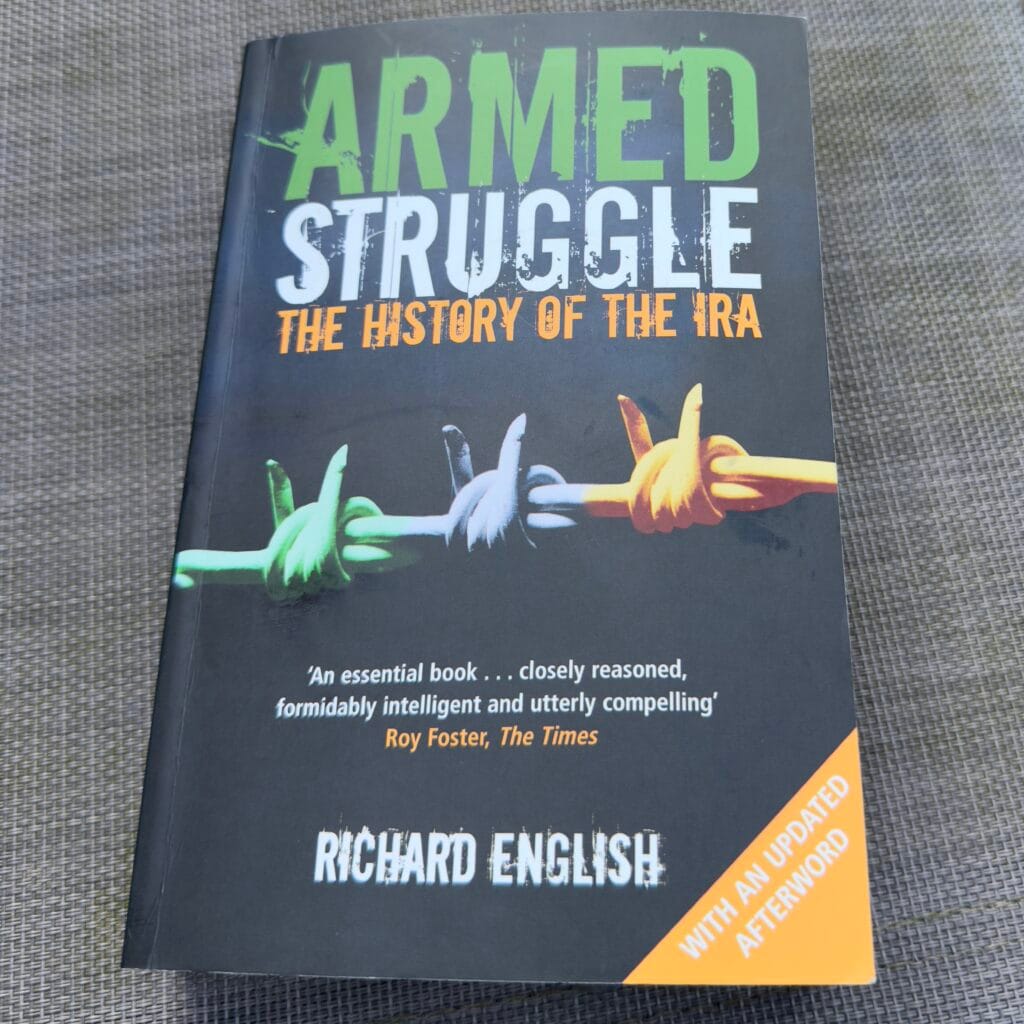
    A book cover. The text reads:

Armed Struggle
The history of the IRA`
By Richard English

"An essential book ... closely reasoned, formidably intelligent and utterly compelling' Roy Foster, The Times"
With an updated afterword

    The initial drafts were set between Crosschester – a city that readers of my first novel will recognise – and Fethard-on-Sea in Ireland – a town most people will not recognise.

    The old, pre-Provisional, Irish Republican Army (IRA) became involved and turned the plot from Laurie’s search for their one true love (they have many of these), called Julianna Górecki into something more complex.

    IRA diamonds are the McGuffin as historical (acts of memory) barbs begin entering the flow of the book. Laurie is given the task of liberating the gold or diamonds or bonds for a crew of mysterious old people. Threats are made, incentives are laid bare.

    The I.R.A. came into play for two reasons:

    1. I wanted some derring do, some John Buchan, some Erskine Childers. Some action-adventure to keep the audience energised.
    2. I wanted to use all the information I’d gathered about my own Irish family to get my Irish passport (thanks Granny Murphy).
      • I’m also learning Irish – my new passion for this took over from my better judgment.

    I then proceeded to get lost in the history of the Irish Republican Army (not the Provos), the Irish Republican Brotherhood, Jim Larkin’s Irish Citizen Army, The Irish Volunteers, and many others.

    Research is all well and good. However, as any historian who has ever got carried away in an archive will tell you, not every avenue of research leads to revelation and a strong spine to their thesis. Much archive/research, no matter how much it glisters, is a long way from on topic.

    The characters who might live on

    Lovely Julianna

    Let’s see what Laurie has to say about Julianna:

    “The remarkably beautiful Julianna Górecki. Tall as a cedar. Elegant as a hazel branch. French as a guillotine. She lived in a massive, crumbling Georgian country house in the village I grew up in. It was a house I knew well. It should have been my house. Our house. Me and Julianna. Julianna and I.

    “Wonderful Julianna, cool and warm, torridly tactile and terrifically remote. I adored Julianna like only a few other men and women I’d encountered. She made me a teen all over and inside. She made me self-conscious in a wonderful way. That’s love isn’t it? A kind of love. I have still never met anybody as satisfyingly distant as Julianna, and I’ve worked extensively in the high-end fashion industry. Julianna then. Julianna now. Julianna forever.

    “Julianna brings a hint of humanity to Bernadette’s house.”

    That hypocrite Bernadette

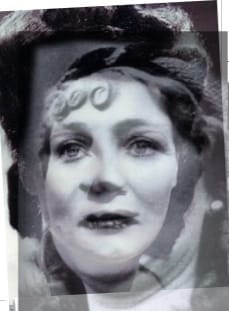
    A black and whte composite photo of two women faces. Yes, two-faced.

    One character who has to remain and probably be used in a new, stripped down novel is Aunt Bernadette, an alcoholic, a heavy smoker, she is religous despite hating almost everything and everyone in God’s creation. She is a vicious and hypocritical harridan but she’s Laurie’s remaining blood relative (or is she? See, that’s how the book veered off in yet another direction). She’s possibly a lesbian who is also a devote Catholic.

    She is being cared by Julianna in a grand country house. She is Laurie’s aunt. She maybe Julianna’ lover. Either way Laurie wants her gone. Bernadette has no reason to go. Julianna always knows that she will be getting it in Bernadette’s Will. Could Laurie be in love with a woman who has no need for that love?

    What follows is how the book looked after I killed 90,000 additional words in a vain attempt to achieve some cohesion. To make The Assumption a book for the reader, and not just an act of writing my own cleverness or (as my internal critic would have it) a revelation of my own mediocrity, at best.

    Anyway, I’ll be adding chapters as this blog of failure unfolds. For now, let’s look at the prologue. This was supposed to give an idea of Laurie’s ability to observe without inclusion.

    That monster O’Neil

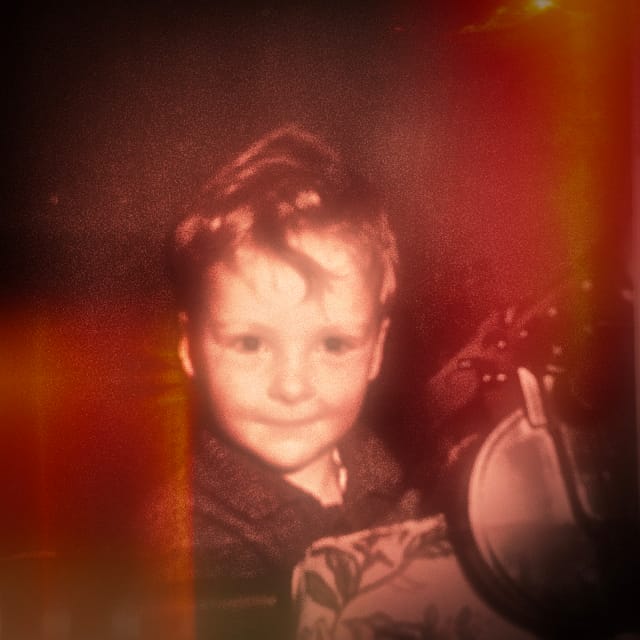
    A young boy with a toy Tommy gun. He looks demonic.

    The novel’s most impactful make presence: Dr Neil O’Neil spends a lot of time in Laurie’s memory. You might even think that Neil is Laurie’s real love interest. He’s is a grandiose, sleazy and charismatic monster born of the 1980s. I knew people like Neil in the UK and in Ireland back then – all cocaine, champagne and lies.

    The more I thought I was writing a story about Laurie, Juliana and Bernadette, the more Dr O’Neil threatened to take over. Maybe see you again elsewhere, Dr O’Neil?

    Little Cartey

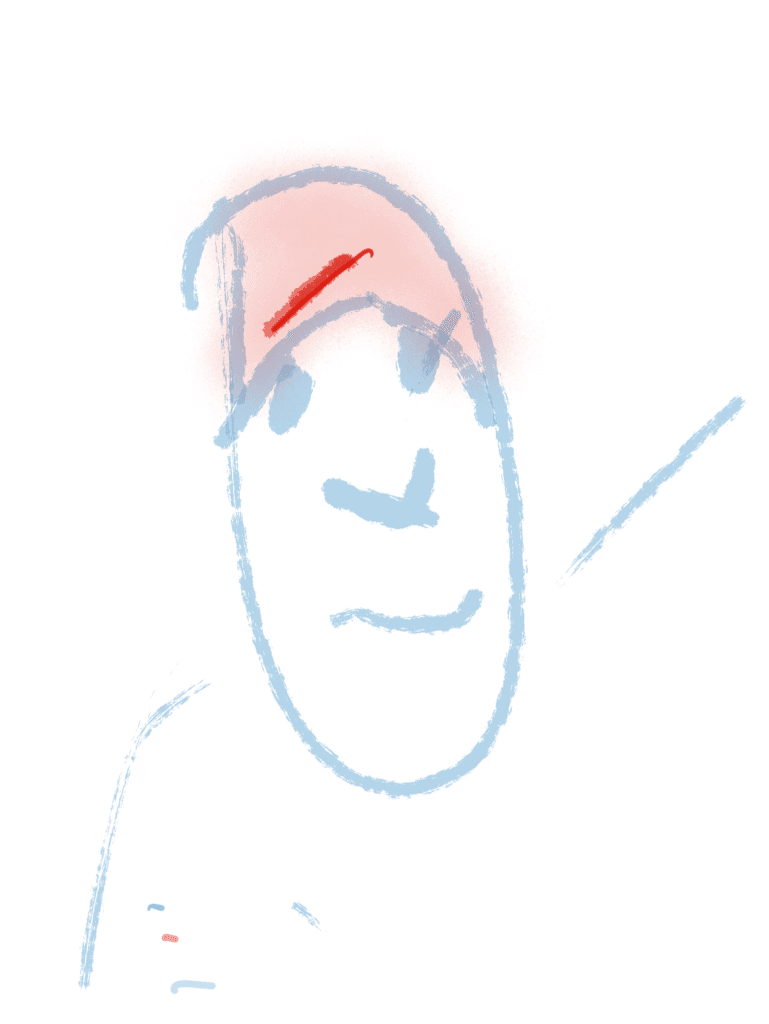
    A sketch of Little Cartey wearing a red cap.

    Little Cartey works at the Four Crosses Hotel (so many crosses, it’s got to be a bit dodgy, right?). This is where Laurie must hand over a letter to the landlady, Mrs Maeve Morgen, so the journey can continue.

    Cartey, with her sibling Big Cartey, are the handypeople at the Four Crossses. They know the city of Crosschester and its outlying villages of Shalford, Commiton, and Bursley deeply and through time.

    Little Cartey is also hugely empathetic, easy to trust, and useful. I’m sure I had Jean Passepartout in mind when I began writing Little Cartey.

    At first Laurie, a natural snob, snobbish by fear, and doesn’t really care much for the help. Because of Little Cartey’s charm, obvious care for people, and growing care, Laurie is able to find the ground, is able to finally see other people.

    It’s, of coures, possible that Little Cartey, not Julianna, not Dr Neil O’Neil is the real love of Laurie’s life. This love story between Little Cartey and Laurie was going to provide an ending to the book itself in fact.

    What did I learn from this failure?

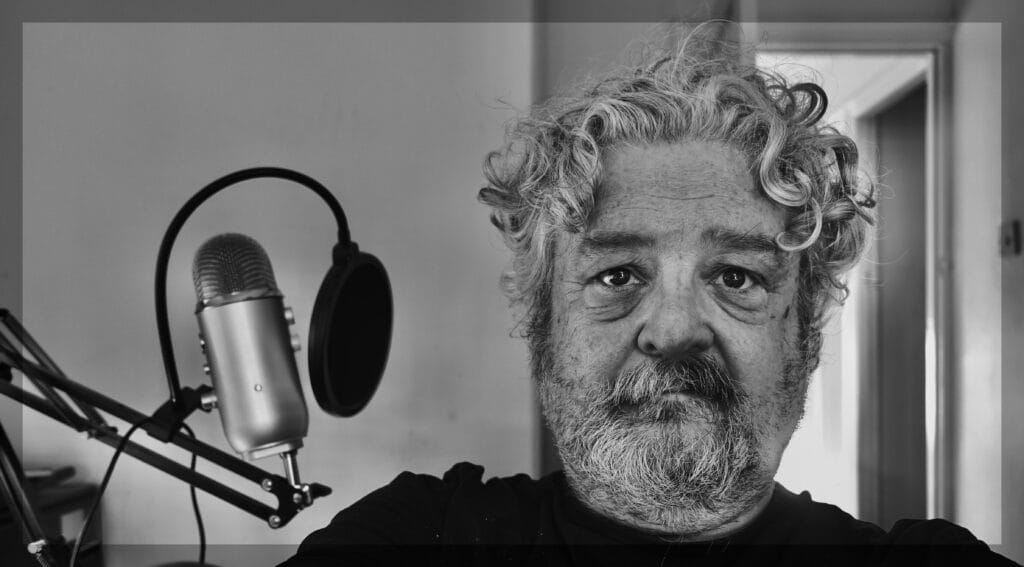
    A very hirsute author with a microphone to his right.

    Writing in the first person is much harder than it seems. It’s a really technical skill to be able to drive the story forward from a single point of view (POV).

    How can Laurie see what is going on elsewhere? How can Laurie read their minds? See their motivations? Without some way of achieving these things what I ended up with was a single character surrounded by people seemingly without motivation. Without any inner lives at all.

    This conundrum could have been solved by switching to a multiple POV narrative with a non-character narrator who could observe and report back on everything and everybody.

    The book, however, didn’t want this this. Not at all.

    So, in the struggle between me the author, and the book itself, I always had the final say right up until that final say was “Enough! Time to move on”.

    I hope you enjoy these fragments of years of work.

    Too many voices not enough depth or action

    Another mistake I made was to be lead by too many characters, and their concomitant plots no matter how small. Creating and growing characters is an immense pleasure for any author. Then the realisation dawns that differentiating between the troops in this army of undifferentiated voices, faces, motivations and subplots adds nothing other than stress to the reader’s time.

    This took me quite some time to come to grips with. No matter how evil or oily or stupid a character is, the author still loves them. However, they must each have clear and cleanly outlined personalities and behaviours. If not, you’re just adding the same characters suffused and obscured by each other.

    Imagine a bar full of drunks and you’re sober, you’ve just walked in. All the drunks are sure they’re being original and have great, pissed-up, stories to tell.

    “I’m not drunk!” they all chorus, all believing this is true.

    It’s time to go elsewhere before they all start talking about themselves because all they have to say will be how interesting, individual, and sober they are.

    Fewer, more tightly written, more compelling characters are more likely to drive the plot forward. The opposite has the effect of flooding and therefore diluting the backbone plot so that the book itself becomes a self-indulgent scrap book not an interesting novel.

    So, after all that, here’s what’s left of The Assumption.

    (After you’ve read this, you might like to read my novel The Water Meadow Man, which I have published.)


    A white sign with black text ("Books") with an arrow pointing right to left.

  • The Assumption – Chapter 0

    New York! New York! Dr Neil O’Neil’s inhuman conclusion about a street robbery

    New York! New York! Dr Neil O’Neil’s inhuman conclusion about a street robbery He was dressed in a light coloured, linen suit with an open-necked pale blue, cheese-cloth shirt. He was wearing brown sandals. He had a beard and his blue eyes were weeping although he didn’t feel sad. He was a lovely man, everybody…

    He was dressed in a light coloured, linen suit with an open-necked pale blue, cheese-cloth shirt. He was wearing brown sandals. He had a beard and his blue eyes were weeping although he didn’t feel sad. He was a lovely man, everybody said so. He was called Brendan Carthy. He was 45 and he was already dying anyway. The Irishman was in no more pain than anyone else though.

    The gunman wanted to take his wallet. 

    No time had passed.

    Most passers-by were frozen into the scene. No longer passing by, their inaction now part of the action.

    Someone called the police. The NYPD. Those boys.

    Other people felt for their handguns, realised this isn’t fucking Texas, this is New York fucking City motherfucker, we’re civilized people. Let go of their fat pistol butts, and just looked on.

    Two police cars arrived. New cars that weren’t messed in memories and the smell of bleach. 

    One young person in the crowd began a slow handclap that didn’t catch on.

    Brendan, the Irishman, closed his eyes, which released Jimmy, the addict, who squeezed the trigger and fired. He’s never so much fired a gun in anger let alone killed another human being. A second later he was demolished by police gunfire from three young officers with the same experience. Jimmy went down smiling in no pain.

    I started to pass-by again, took a photograph and continued my walk to meet my good friend Dr Neil O’Neil in a favourite bar. 

    I told him what I’d seen. He shrugged and ordered two beers bottled and two vodka highballs.

    “It’s a big city. Shit like that happens in big cities. It is what it is.”

    That was Dr Neil O’Neil all over. He took things in his stride. He compartmentalised and prioritised. He was a stoic or a sociopath, depending on your own pretensions.

    “You Knew I Was A Scorpion” tattooed on this right thigh. 

    “When You Hitched a Ride”, was on his left.

    On this chest he had ‘Shit Happens. It Is What It Is’ in white text on a black bar.

    He had a garish peace mandala on his back.

    I was never quite sure what it was he did for his money but he was tremendously great fun. For the most part.

    We were close for a few years. He would spend his money freely on all the things that you, sensible as you are, have been warned about and heeded. One day, he disappeared. Presumed dead. Assassinated or fell off a dock or choked to death on a sandwich or his parachute failed. That was decades ago.

    So, when I got out of prison for a crime that many people said I probably didn’t even commit, Dr Neil O’Neil was the last person on my mind. My hateful Aunt Bernadette and my sweet Julianna – a love of my life –  were at the top of my list.

    But shit happens.

  • Mountain Pressure

    “Some delicious soup might teach you at least one decent recipe too,” said Jane.

    Dread, dread, dread. The forest is dark and full of autumn, chewed over by winter frosts and snows. There is a crunch to it as the sun sets behind the traveller making her way up the mountainside to the refuge and a warm, thick stew.

    Some wolves are howling far away but still too close. Karen’s mountain hike dips, losing valuable ascent but she pushes on. The day is leaving. It’s getting dark. It’s been 12 hours since she set out from the town this morning. She walked out past the graveyard, the bar, the tourist office and the mayor’s house. Her friend, Jane, was walking with her.

    The last time they’d walked together had been on the same hike but a year previously. They’d gone in the winter, in January, because that was the only time they could take off from their jobs: Karen in catering. Jane as a lawyer. They’d walked and talked about their lives. Long, involved conversations fuelled by the rhythm of their breathing, the steady beating of their hearts and the contentment of taking measured step after step with a destination and return planned and available. Ups and downs and winter birds singing around them. The pine trees’ scent, the wind in the needles above and around them.

    Finally an ascent regained some of the lost height. They met a hilariously blond Swedish family coming the other direction along the sandy path: mother, father, teenage son and daughter. Tall, slim, smiling. They’d shared information about each other’s routes, drank some water. Apparently there was an ancient monastery carved into the valley side just a few kilometres ahead. A step ladder of sorts carved into the side too. The monks were the jolly kind, happy to meet and feed travellers with a vegetable broth that was absolutely delicious according to the nodding Swedes.

    Jane and Karen had time. They decided to visit.

    “Some spiritual enlightenment would be just the thing for a lawyer”, said Karen.

    “Some delicious soup might teach you at least one decent recipe too,” said Jane.

    They walked, and a few kilometres later they wandered down into the valley. Looking up into the wan winter sun they saw the monastery and carved stepladder. Steep. Steep. Steep. But the building looked amazing. White, vertical, calm, beautifully simple.

    “After you”, Jane told Karen as the drizzle began to slick the steps. 

    “Let’s get in there before the rain really starts.”

    As they climbed they chatted about the state of the world and how Jane’s marriage had finally turned the corner after her second, agonising miscarriage. She’d decided not to pursue children any further. Her husband, Craig – a teacher at an inner city state school – had taken that badly at first. He’d fought hard against it, looking for reasons and reason. Then he moved to self-blame and then to self-hate, then to hating her, then to hating everything. 

    They’d nearly separated after seven years of relatively untroubled togetherness because of the kids they never had.

    Up they climbed. Nothing more than a dampening, slickening drizzle to mar the day. Half way up they stopped on a platform and looked over the valley. 

    “My god doesn’t it look brilliant from all the way up here?” said Karen. Jane nodded. She looked up. Not far now. Delicious soup. Maybe they might overnight with the monks? 

    “It’s not going to come to us. Let’s go. You first”, Jane prompted. They set off again in good spirits and then Jane fell.

    On the approach to the foot of the mountain, on a needless detour to an ancient monastery carved into the valley side. Jane fell.

    
She fell maybe two metres onto the platform. Where she bounced due to her day pack. She bounced and then rolled, and she saw the platform disappearing in front of her. Terminal velocity in seven seconds. Jane fell and Karen didn’t realise for five seconds. Karen turned and stopped breathing as she watched Jane scrabbling to get a grip on the wet floor of the two metre-square platform.

    
Jane fell. She died. Right there. Right then.

    That was a year ago.

    Now Karen walks on with Jane beside her, inside and ahead of her. She isn’t going to the valley. There haven’t been any more pointless detours in the past year. She is completing the hike as they’d planned on the flight over and then the train journey to the small town where they’d stayed the night before the hike, and where they’d intended to stay the night after the descent.

    In the left breast pocket of her technical top was a photograph, a piece of cloth, a tealight and a cigarette lighter.

    She is going to have a small ceremony, find a memento and take it back: a pebble, a flower, anything, something. Karen keeps walking, thinking about her friend. She walks to the place where they’d met the lovely Swedish family and instead of taking a right turn a few kilometres later she walks straight on. Up and down. On up to the refuge. Thinking of Jane. Thinking of getting home and getting on with life. Not thinking about death.

    She loves Jane and she always will. Jane is her sister. Jane fell and there was no reason for it.

    Just drizzle and a detour. An accident.

  • Lucy’s days

    The noodles would slip down and fill his stomach, taking away the humiliation he felt at being in debt to his own daughter.

    February 9th #1

    Finding the bird was easier than Leeland had imagined. He’d picked it up by the war memorial near the park. He’d taken it from its nest to replace the one he’d bought the day after his daughter’s conviction. He called it Lucy-Doosey the Third. Once he had got it back to the house, he looked after it as well as he could.

    There was, of course, only one way to steady the old hands: a shower, then some noodles and a mug of something.  He sorted the first, quick and cold, scraping away a week’s worth of night sweats and smoke from his hard, inflexible, old self with a rough cloth and some dishwashing liquid. 

    He waddled to his bedroom where he packed an old, off white Adidas sports bag with two shirts, a pair of khaki shorts, three passports, and an oilskin (the first one that came to hand). He wrapped a parcel and a block of cash. He’d buy a phone and some new clothes on the way to the airport.

    Throwing the main fuse – the stuff in the fridge and the freezer didn’t matter any more, he stood on the top step outside the front door and looked back into the room. He sniffed and pulled the door shut, locked it, threw the keys under the mat and turned away into the mist and traffic of another October morning. Despite the mist it was bright out there. Then again, he thought, most everywhere was bright compared to that apartment.

    He planned to eat noodle soup. Pho they called it, pronounced ‘Fa’. He’d learned after having called it ‘Foe’ for years. He would eat it on a formica-topped table in a Vietnamese cafe around the corner. It was run by a tall, tall man. It was up a flight of stairs. He would be seated at the table at the back near where an old man sat next to a massive pot in which they made the broth base for the Fa. The tall man had told him about this one night as they both sipped from cheap, bottled beer and the lights outside in the street came on. 

    Lots of basil, he thought. 

    Lots of fresh chilli.

    He sped up, going nearly as fast as his chubby legs and smoker’s lungs would allow. Lots of chilli, lots of meat, some lung, some tripe and lots of fat noodles.

    A mug of rum and coffee, maybe even a glass of that salty lemon/sour plum drink. Stuff to look forward to.  He’d be fine after that, not only would his hands stop shaking, so would his view of what he’d agreed to do. 

    That bird had died, of course it had.

    The noodles would slip down and fill his stomach, taking away the humiliation he felt at being in debt to his own daughter. Something to look forward to indeed. Finally being free of a debt that he shouldn’t have owed. Whichever way he looked at it – and as a man of zero honour, he had to have plenty of viewpoints – he should just have moved on.

    He opened the door and stepped into the cafe, salivating and ready. Once he’d consumed this rich and sustaining breakfast he’d go about getting a gun.

    Feb 10th #1

    Lucy walked around the kitchen. She walked and walked. She walked around the lounge room. It wasn’t her room in her house any more, it was just a room in a house with two big, ugly capital “AYs”. 

    Changes had been made, to increase salability maybe? It was cold and impersonal, without things in sight. No books or magazines or things. There were photographs at strategic points. To her it felt temporary, not the home it had once been. It offered no clues as to why she had been summoned.

    She made do with one of the warm, cheap bottled beers she had brought with her, and went into the garden where she sat waiting for them. 

    Finally, two people came out. They had fitted doors to the garden from the kitchen. What an idea. “Sorry to keep you waiting, Lucy. We had a lot of preparation to do.” It felt to her as if they were saying it in unison like a well rehearsed choir. Sickening.

    She studied them closely as they walked towards her. They looked much the same as they had last time they’d all met. Perhaps a bit weathered but it had been years. Her ex-husband, Bob and his new (not new) wife, Pauline.

    The beer helped take the edge off her anxiety and anger. 

    “Why have you asked me here? What do you want?”, she asked, feeling for the key and vaping pen in her skirt pocket.

    Bob put the plates on the table in front of her, gave her a, “Are you okay?”, look. As if. As if she was and he cared.

    Pauline sat down in the slatted, beautifully pre-battered summer chair and smiled. She had a large, dimpled wooden bowl of salad on her hands. She put it on the table. She reached out for Bob’s hand and Bob looked happy.

    For no possible reason other than spite, Pauline said, “We’re so happy together”. So weird.

    Lucy balled her hands in a tight fist on her lap. She smiled. Then she actually said, “It’s nice to be happy”.

    The other woman’s reply didn’t matter. Lucy drank some more beer and wondered idly what the first best way of hurting Bob might be: a bullet in the back of Pauline’s head maybe?

    “Yes it is”, Pauline replied not having expected that response from the dried up, bitter and obviously lonely and unhappy woman.

    Lucy felt weary all of a sudden. Old memories like jellyfish tentacles, liable to sting, nearly visible, horribly long, coming up from the depths.

    Bloody Bob and Pauline. Bloody happiness. Fuckers.

    “Have some salad, Lucy.” Pauline gestured towards the bowl she’d placed on the table.

    “I’d rather not,” she replied. “I have an intolerance.”

    Bob’s face made an insipid, “Oh poor you” expression.

    Pauline shrugged. 

    “Look Lucy, this isn’t easy for us either. I know you probably still hate us,” Bob’s already pathetic voice tailed off as she looked to Pauline for help.

    “You said it”, Lucy.

    Bob piped up, ”But we have to come to some sort of arrangement regarding Charlie.”

    “You’ve got the bloody house Bob, what more do you want?”

    “Charlie needs a stable family, Lucy”, stated Pauline as a fact that she considered no one else had yet noticed.

    “You’ve been in prison, you need time to reacclimate to the modern world”, said Bob.

    “Fucking hell, Bob, it was only five years. I’m not the Count of Monte fucking Cristo. And I was in there for you! For our family.”

    Bob drummed his fingers on the table. Empty wine and water glasses rattled.

    “That’s not the issue now though. Our son is. His well being is. That’s why Pauline and I want to formalise things.”

    “That’s why we are adopting Charlie”, said Pauline.

    “And Pauline will be another of his mothers”, simpered Bob.

    Pauline nodded like artillery.

    Feb 10th #2

    Lucy had ended up in jail because she was stupid. That’s the word she used. White collar, fall for it, protect your man, stupid… jail.

    Jail? Don’t fuck with the fine language. Stupid. Prison. She breathed in. She took some salad. She hit Pauline full in the face, she hit her with her balled fist. She wanted to cave her head in.

    Bob, as usual, did not know where to look or what to do.

    Meat started smoking on the heat of the barbecue. 

    Lucy waited for the other two to do something.

    “You fucking whore!” screamed Pauline. She jumped up, spoon in hand, ready for action. Lucy hit her in the throat, flat of the hand. Bob was in what he would have called “a tizz”. This had suddenly become very untidy indeed. Pauline fell like a city centre tower, clawing at her throat, trying to breathe.

    Five years for him. Now out of prison and it was a cold and shitty world. Lucy, looked at Bob who was kneeling over Pauline. Lucy spat down, turned on her heels, went indoors, upstairs, and into Charlie’s room. Of course, Bob had made sure that Charlie wasn’t in this house. 

    Lucy went into what had been their bedroom, shut the door, leant a chair under the handle and sat on the bed. This wasn’t helping. She looked at the phone by the bed. She looked out of the window onto the wide, safe, road. She removed the chair and felt in her bag for what she knew was in there, just to make sure. Where the fuck was he? He wasn’t there. Again.

    She threw the keys out of the window so that they landed on the driveway.

    9th Feb #2

    Leeland woke up from a nap, he coughed. He’d been coughing for days. Too many cigarettes, too much booze, too many drugs, and all that interminable time on his hands. Cancer probably too.

    The phone rang. It never rang. 

    His hands shook as he pushed away the bird feed, bottles and pornography to locate the receiver.

    “Yeah?”

    “Dad, it’s Lucy.”

    He was only mildly surprised.

    “Lucy-Doosey the first”, he said. “Well now. I hoped you wouldn’t need to call me.”

    “I know,” her voice sounded shaky, “I need to call in that favour.”

    He laughed. Then realised what she wanted from him. What he’d promised to do but only if she asked him.

    “OK Lucy-Doosey, OK.”

    “Tomorrow. My house. Our house. His house. Their house”, she hung up.

    Leeland drank deeply from the bottle and turned his thoughts to the task ahead. He picked up the bird feed and opened the cage. He’d leave as soon as his hands were steady enough to drive.

    “Can’t leave you to starve,” he muttered and reached for the bird, shaking fingers snapping its neck like a winter hawthorn twig.

    He’d probably be gone a while.

    Feb 10 #3

    Lucy came down to the kitchen. Bob was, as usual, looking for God to descend and make it all better. 

    Pauline had recovered and was looking so pissed off. Lucy had to laugh. 

    “Pauline, you look absurdly fucked up.”

    “I will kill you, girl. I will – Jesus this hurts.”  She felt her throat and grimaced. She was scared, Lucy could tell.

    “Bob, why don’t you do something?!” she screamed at him. He sat down in a damp mess looking more like a bag of washing than a man.

    “What? What should I do?”

    Lucy thought of her child, thought of Charlie, as she looked at the couple. Then she thought about the hell-strike she’d just called in. She almost fainted, at least she imagined that’s how almost fainting probably felt. It was quite pleasurable. In prison if you fainted, well, the cycle of gaining your self-respect started again. She’d only ever seen two women, only one got up. She’d seen one thousand girls faint though.

    A car pulled up outside the house, coughing its guts out. A car door slammed shut. Slow, unsteady footsteps, and the front door was unlocked and pushed open. Then the door into the kitchen opened.

    She was reminded of prison and her sacrifice for Bob. She smiled and said, “Goodbye”, as her father walked in. 

    “Charlie’s in the car, waiting”, he said as Lucy walked past him. She pecked him on the cheek.

    “You don’t look so good, Dad. We’ll fix that”, she shut the door behind her and went to wait with Charlie in the car.

    END